Roof damage after a storm or a winter leak? Level Built assesses storm and ice damage across New Hampshire and helps you understand the repair options.
Wind, hail and winter ice can leave you wondering whether your roof needs a repair or whether it is still doing its job. Some damage is easy to spot, such as missing shingles or a branch on the roof. Other problems only become apparent when rain or melting snow finds a way inside.
Level Built serves homeowners across New Hampshire. We look at the condition of the roof, explain what we find and help you decide what needs attention. A storm passing through does not automatically mean you need a new roof.
Strong wind can lift or tear shingles, loosen flashing and leave parts of the roof exposed. A shingle may settle back into place after the wind drops, so the roof can look better from the driveway than it does up close. Hail impacts can also damage roofing materials, but marks alone do not tell you how extensive the damage is.
The useful next step is an assessment of the affected areas and the surrounding roof. We look for damaged materials, openings where water could enter and details around chimneys, vents, valleys and roof edges. The age and existing condition of the roof matter when deciding whether a repair will hold up.
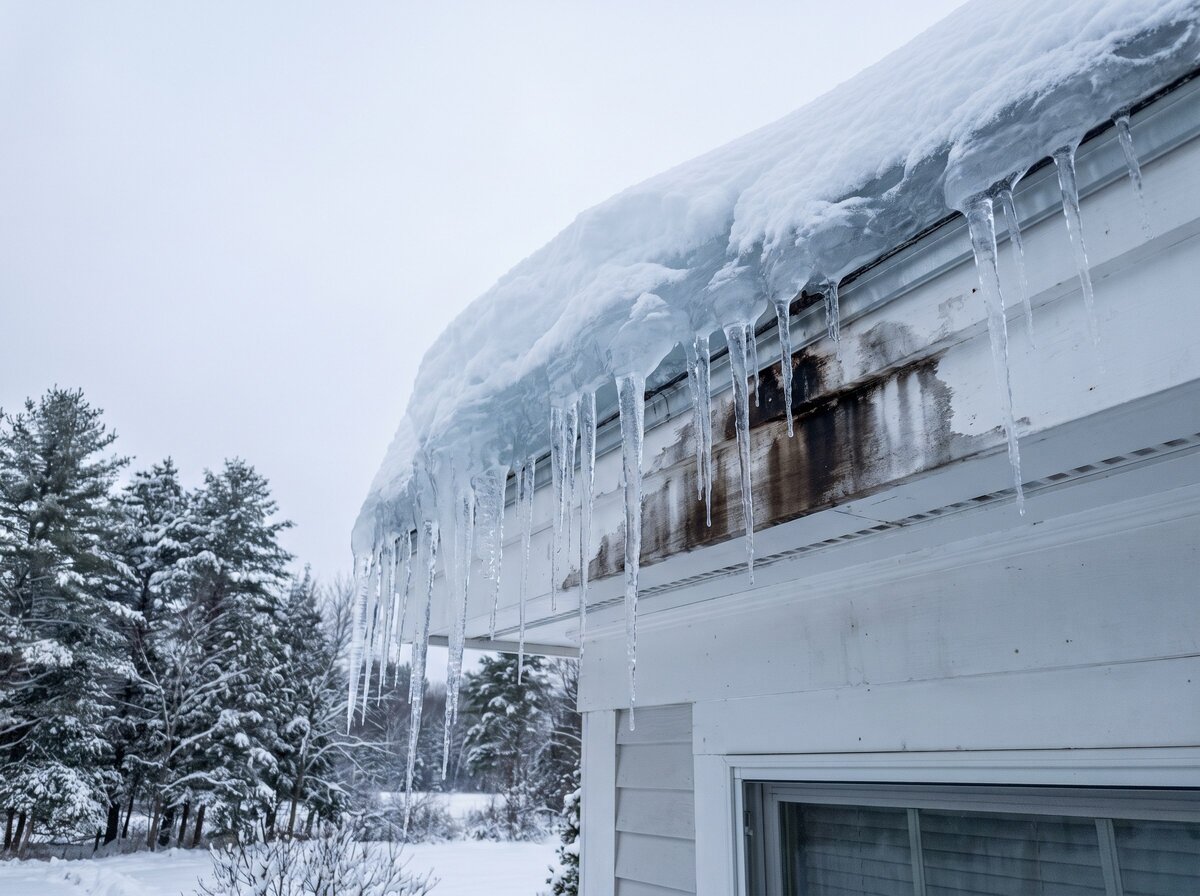
An ice dam forms when melting snow refreezes near a colder roof edge and blocks water from draining away. Water can back up beneath the roofing and reach the decking, insulation or interior finishes. You might notice a ceiling stain during a thaw even though the roof did not leak during the last rainstorm.
Repairing damaged roofing is one part of the answer. If ice dams keep returning, heat escaping into the attic, insulation and ventilation may also need evaluation. Replacing shingles alone does not necessarily address the conditions that allowed the ice to build up.
Tell us where the leak appears, when it starts and whether the same area has leaked in previous winters. Those details help us understand the problem before recommending the roofing work.
After a storm or a period of snow and thawing weather, look for these signs from a safe location:
A stain does not always sit directly below the opening that caused it. Water can travel before it becomes visible, which is why roof repairs and leak tracing start with finding the source.
Stay off a wet, snowy or icy roof. Take photos from the ground or inside the home where it is safe, and note when you first noticed the problem. Do not try to chip ice off the roof; you can damage the roofing and put yourself at risk.
When you contact us, include the property address, what you have noticed and whether water is actively coming inside. For a seasonal home, let us know how access can be arranged if you are away.
Keep your photos and notes together. If you intend to make an insurance claim, ask your insurer about its reporting requirements and coverage. Our roofing assessment helps explain the work needed; coverage decisions belong to your insurer.
A localized problem on an otherwise sound roof may be suited to a targeted repair. Widespread damage, deteriorated materials or damaged decking can call for a larger scope of work. We explain the condition we find rather than treating every storm as a reason to replace the entire roof.
If replacement makes sense, we can discuss asphalt shingle roofing, metal roofing or rubber flat roofing, depending on the roof's slope and construction.
You do not need to know exactly what is wrong before contacting us. Tell us what you have noticed, where the property is and whether water is coming inside. Request a free estimate using the form below, or use the call and text buttons to talk with Level Built about the next step.
Level Built serves homeowners throughout New Hampshire, including the communities below. Select a town to learn more, or contact us about your project anywhere in the state.
Let us know what you noticed, when it started and whether water is actively coming inside. Include your town and any access details for the property.
Prefer to talk it through? Call or text us about the next step.
Leave a few details about the damage and your property.
We will only use this to get back to you about the work. No spam.