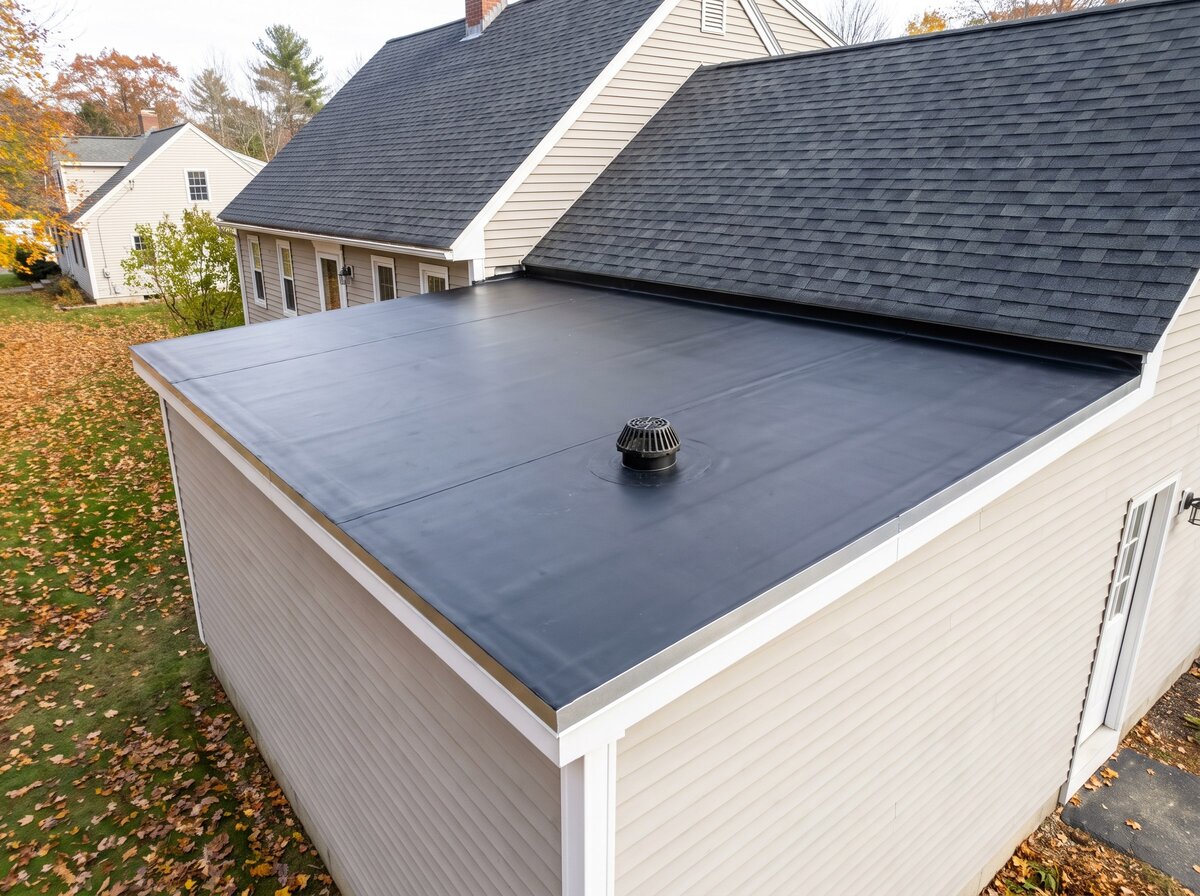
Rubber roofing, commonly known as EPDM roofing, is a popular low-slope and flat-roofing system that has been used throughout New England for decades. Unlike traditional asphalt shingles, EPDM is designed specifically for roofs where water drains more slowly and shingles are not the ideal application.
EPDM is a durable synthetic rubber membrane that creates a continuous layer of protection over the roof. It is commonly used on flat and low-slope roofs, additions, porches, garages, and other areas where traditional shingles may not perform properly.
New England roofs have to deal with some of the toughest weather conditions in the country. Heavy rain, snow, ice, freezing temperatures, and repeated freeze-thaw cycles can all put stress on a roofing system. EPDM is designed to remain flexible through temperature changes, making it a great option for these conditions.
Benefits of EPDM rubber roofing include:
One of the biggest advantages of EPDM is its ability to create a continuous waterproof membrane. When properly installed with the correct seams, flashing, drainage, and edge details, it provides reliable protection against the moisture that flat and low-slope roofs are especially vulnerable to.
If you have a section of your home where water doesn't drain quickly, rubber roofing may be a much better solution than trying to force a traditional shingle system onto a roof that isn't suited for it.
Rolled asphalt roofing is another practical roofing option, particularly for low-slope areas where traditional asphalt shingles may not be appropriate. It uses a continuous roll of asphalt-based roofing material rather than individual shingles, creating a more streamlined roofing surface.
This type of roofing can be an excellent choice for porches, additions, sheds, garages, low-slope roof sections, and other areas where water needs to move across the roof differently than it would on a standard pitched roof.
Rolled roofing offers homeowners a combination of practicality, affordability, and straightforward installation.
Benefits include:
For New England homeowners, rolled asphalt can be particularly useful when dealing with smaller low-slope sections of a home where traditional shingles may not provide the proper water-shedding performance.
Not every roof should be covered with the same material. Pitch, drainage, existing roofing, roof condition, weather exposure, and the structure itself all play a role in determining which roofing system makes sense.
At Level Built, we can help you understand your options rather than simply recommending the same product for every home. Whether your project calls for EPDM rubber roofing, rolled asphalt roofing, asphalt shingles, or metal roofing, our goal is to install a system that is appropriate for the roof and built to handle New England weather.